
New Baby Home Care Checklist
Bringing home a newborn is one of those moments you imagine for months, sometimes even years, and when it finally happens, it can feel both magical and overwhelming at the same time. Many parents worry about missing something important or forgetting a key detail, which can make those first days at home more stressful than they need to be. I remember feeling excited, exhausted, and constantly second-guessing whether we were truly prepared.
That’s why I’m sharing this New Baby Home Care Checklist. Having a clear, realistic plan in place before your baby comes home can help you feel more grounded and confident, allowing you to focus on bonding instead of scrambling.
New Baby Home Care Checklist
Newborn care goes far beyond buying baby gear and stocking up on cute outfits. It includes home safety, hygiene, daily routines, and being prepared for unexpected situations, especially during those first 24 hours and early weeks. A thoughtful checklist helps parents stay organized, avoid unnecessary purchases, and focus on what truly matters for a newborn’s health and comfort as well as your own. This guide is meant to simplify preparation and support you as you adjust to life with a new baby.
How to Take Care of a Newborn
Feeding Basics
Feeding is one of the most time-consuming parts of newborn care. Whether you’re breastfeeding, bottle feeding, pumping or doing a combination, having the right feeding supplies on hand is essential. Breastfeeding parents may want a breast pump, storage bags, and nursing support pillows. Bottle feeding requires bottles and nipples in newborn size (or even preemie size!), formula if needed, and a reliable cleaning routine that often requires some equipment. Newborns eat frequently, often every 2–3 hours, so preparation makes a big difference.
Diaper Changes and Hygiene
Newborns go through a lot of diapers - often 8–12 per day! Keep diapers, wipes, diaper cream, and disposable bags within easy reach. Hygiene matters, especially during frequent changes, so wash hands often and clean changing surfaces regularly.
Safe Sleep Practices
Safe sleep is one of the most important parts of newborn care. Babies sleep a lot, but they should always be put to sleep on their backs, on a firm mattress, in a dark, cool and empty sleep space. Follow pediatric safety standards by avoiding loose blankets, pillows, or toys. Safe sleep guidelines reduce the risk of sleep-related incidents and provide peace of mind.
Bathing and Umbilical Cord Care
Newborns don’t need daily baths. A few times a week is usually enough. Until the umbilical cord stump falls off, stick to sponge baths and keep the area clean and dry. Gentle products designed for newborn skin are best.
Knowing When to Call the Pediatrician
Crying, sneezing, and irregular sleep are normal. However, signs like fever, poor feeding, difficulty breathing, or unusual lethargy warrant a call to your pediatrician. Trust your instincts—you know your baby best.
How To Prepare Your Home For A Newborn
Create a Safe Sleep Space
Set up your baby’s primary sleep area before bringing them home. Whether it’s a bassinet or crib, ensure it meets current safety standards and is placed away from cords or hazards.
Set Up Multiple Diaper Stations
Having diaper changing stations in more than one room can save time and energy. Stock each area with diapers, wipes, and extra clothes to make changes quick and stress-free.
Baby Proof Early
Even though newborns aren’t mobile, early baby proofing helps establish habits. Secure heavy furniture, keep cords out of reach, and store cleaning products safely.
Laundry and Sanitation Setup
Newborn laundry adds up quickly. Use fragrance-free detergent and keep burp cloths, swaddles, and newborn clothing essentials clean and accessible.
Temperature and Lighting
Babies sleep best in rooms that are comfortably cool with soft lighting. Blackout curtains and dim night lights can help maintain healthy sleep routines, as well as white noise.
What Are the Essentials for a Newborn?
Newborn Clothing Essentials
Stick to simple, comfortable pieces in newborn size. Onesies, sleepers, socks, and hats are usually enough for the first few weeks.
Newborn Bath Essentials
A baby bathtub, gentle (unscented!) soap, washcloths, and soft towels make bath time easier and safer.
Newborn Medicine Essentials
Include infant acetaminophen (with pediatric guidance), a digital thermometer, and saline drops.
Newborn Health Essentials
These include nail clippers, a nasal aspirator, and grooming basics designed for babies.
Newborn Sleeping Essentials
Cribs, bassinets, swaddles, and fitted sheets should all meet current safety standards to support safe sleep.
Newborn Bedside Cart Essentials
Many parents find a bedside cart helpful for overnight care. Stock it with diapers, wipes, feeding supplies, bottles and nipples, and spare pajamas.
Newborn First Aid Kit Essentials
Include bandages, thermometer, nasal bulb, and emergency contact information.
Newborn Feeding Essentials
Feeding essentials vary by family but may include bottles, a breast pump, formula, burp cloths, and storage containers.
Newborn Essentials Checklist
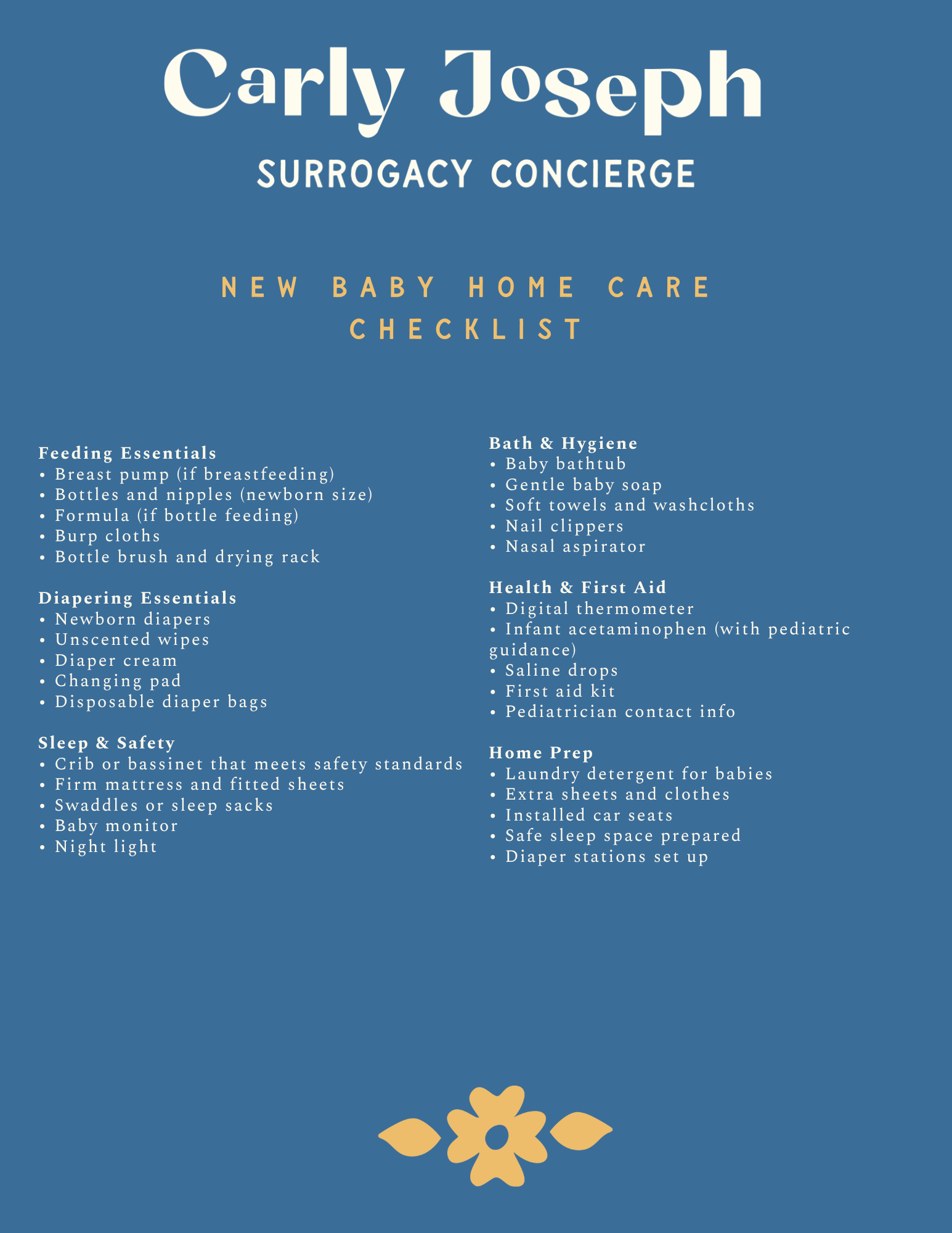
If you’re looking for broader guidance beyond home care, I recommend reading my tips for new parents for practical advice on navigating those early months.
Preparing your home ahead of time helps create a calmer transition for everyone. With the right systems in place like safe sleep spaces, feeding routines, and essential supplies, you can spend less time worrying and more time enjoying those early moments. And don’t forget essentials like car seats, which should be installed and checked before heading home from the hospital!